History of the Roman Empire
History of the Roman Empire
The Rise of Rome
Exploring the origins and expansion
This presentation will cover the history, culture, and impact of the Roman Empire from its inception to its fall.
Founding of Rome
- Legendary founding in 753 BC by Romulus and Remus.
- Initial governance by kings until the establishment of the Republic in 509 BC.
- Strategic location near the Tiber River for trade and defense.
- Cultural influences from Etruscans and Greeks.
- Development of early Roman laws and societal structures.
The founding of Rome is steeped in legend, emphasizing the significance of its geographical position and early governance.
The Roman Republic
The Roman Republic was established in 509 BC, characterized by a complex system of checks and balances. It featured elected officials called consuls and a Senate that represented the aristocracy. The Republic expanded through military conquests and alliances, facilitating cultural exchange.
The Republic was a significant period that laid the groundwork for Rome's expansion and governance structure.
Punic Wars
- Series of three wars against Carthage from 264 to 146 BC.
- Hannibal's famous crossing of the Alps in the Second Punic War.
- Rome's eventual victory solidified its dominance in the Mediterranean.
- Carthage's destruction in 146 BC marked a turning point.
- Expansion into North Africa and Spain post-war.
The Punic Wars were crucial in establishing Rome as a dominant power, showcasing military strategy and resilience.
Transition to Empire
The late Republic saw internal strife, leading to civil wars. Key figures like Julius Caesar emerged, eventually leading to his assassination in 44 BC. The power struggle concluded with Octavian (Augustus) becoming the first emperor in 27 BC, transforming Rome into an empire.
The transition from Republic to Empire was marked by political upheaval and the rise of powerful leaders.
The Julio-Claudian Dynasty
- First imperial dynasty, including Augustus, Tiberius, and Nero.
- Augustus established a period of peace known as Pax Romana.
- Expansion of infrastructure and public works.
- Nero's reign marked by tyranny and the Great Fire of Rome in 64 AD.
- Dynasty ended with the Year of the Four Emperors in 69 AD.
The Julio-Claudian Dynasty was pivotal in shaping early imperial Rome, balancing governance with expansion.
Flavian and Five Good Emperors
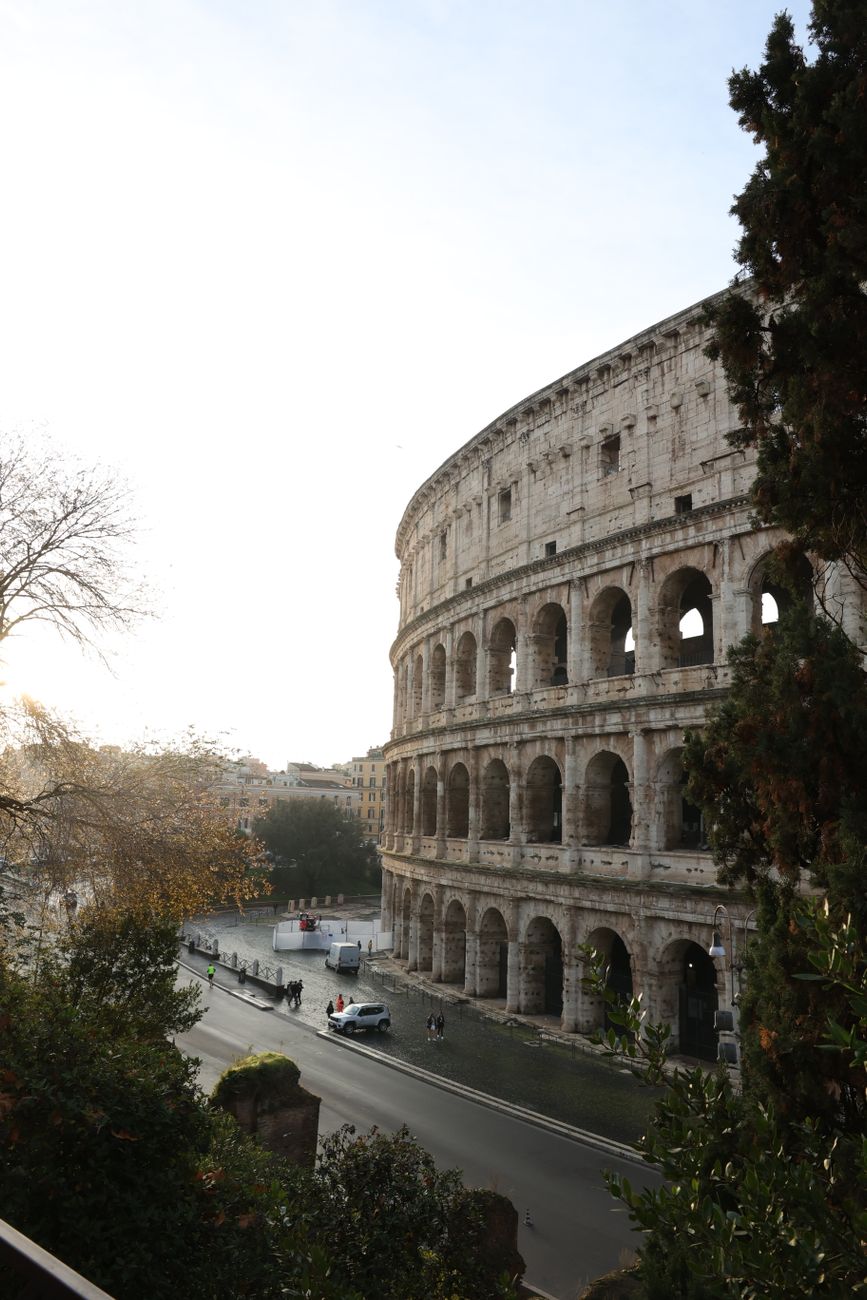
The Flavian dynasty (69-96 AD) oversaw monumental architecture like the Colosseum. The Five Good Emperors (96-180 AD) fostered prosperity and stability, with leaders like Trajan expanding the empire to its greatest territorial extent by AD 117.
This era is often viewed as the high point of the Roman Empire, marked by cultural and architectural achievements.
Crisis of the Third Century
- Period marked by political instability and economic decline (235-284 AD).
- Over 20 emperors ruled in a short span, often through military force.
- Invasions and plagues further weakened the empire.
- Division into multiple states and loss of territories.
- Reform efforts by Emperor Diocletian to stabilize the empire.
This crisis severely tested the resilience of the Roman Empire, leading to significant reforms.
Constantine and the Eastern Empire
Constantine the Great (reigned 306-337 AD) reunified the empire and moved the capital to Byzantium, renaming it Constantinople. This shift marked the rise of the Eastern Roman Empire, which outlasted the West.
Constantine's reign was crucial in defining the future of both the Roman Empire and Christianity.
Fall of the Western Roman Empire
- Officially fell in 476 AD when the last emperor, Romulus Augustulus, was deposed.
- Invasions by Germanic tribes such as the Visigoths and Vandals.
- Economic troubles and reliance on mercenary armies.
- Cultural and political fragmentation of the West.
- Eastern Roman Empire continued as the Byzantine Empire.
The fall of the Western Roman Empire was a complex process influenced by various internal and external factors.
Legacy of the Roman Empire
The Roman Empire's influence persists through language, law, architecture, and governance. Latin evolved into the Romance languages, Roman law laid the foundation for modern legal systems, and its architectural feats inspired future civilizations.
The legacy of Rome continues to shape contemporary culture, law, and governance around the world.
A Reflection on Rome
"Rome wasn't built in a day, but it fell in one."
This quote encapsulates the grandeur and fragility of the Roman Empire, reminding us of its historical significance.
Key Takeaways
As we conclude, let's reflect on the profound impact of the Roman Empire on our world today.
Thank You
Questions and Discussion
Thank you for your attention. I'm happy to answer any questions or engage in discussion.